Tenant servicesAcquisitionsCareersDeutsch
Send an enquiry info@balandra.de
Article · Commercial

Use is the key question

There is, in principle, broad and lasting demand for housing. With commercial property, by contrast, it is the use that decides whether a property has any value at all. What this means for owners and banks.

By Oliver Handschuck, Head of Commercial Asset Management · As of October 2026

Residential and commercial property follow different rules

Residential property

Demand is, in principle, broad and lasting. Here, the question of use is usually a core issue only in demographically difficult locations.

  • There is lasting underlying demand for housing.
  • Many people are potential tenants.
  • Value stabilises over time.

If a flat stands empty, value is lost. But the building remains usable and can be let again.

Commercial property

Use is decisive. Without a use, there is no value.

  • The space is tailored to a particular use: either it fits exactly, or it can hardly be put to use.
  • The pool of potential occupiers is limited. Location, building and use have to match.
  • Without a use there is no income, and the value falls towards zero.

Long-term vacancy leads to falling value, rising costs and, in extreme cases, to the property becoming economically worthless.

Which commercial properties have a future

Office, retail and production property can be roughly divided into three groups. The dividing lines are drawn not by type of use, but by location, building and demand.

Office
Stable and future-proof
  • Prime locations and growth regions
  • Modern buildings with up-to-date building services and good energy performance
  • Easy to let
Future-proof with work
  • Weak locations
  • Outdated buildings with high operating costs
  • High vacancy, high risk
  • Assess adaptation or change of use
Surplus in the long term

Assess demolition or redevelopment

Retail
Stable and future-proof
  • Prime locations with high footfall
  • A good mix of uses
  • A good experience and a pleasant place to spend time
  • Stable tenants and turnover
Future-proof with work
  • Structurally weak locations
  • Falling footfall and purchasing power
  • Concepts that are no longer viable
  • Assess adaptation or change of use
Surplus in the long term

Assess demolition or redevelopment

Production
Stable and future-proof
  • Good transport links and infrastructure
  • Modern, flexible space
  • Up-to-date technical installations and good energy performance
  • Demand from industries with a future
Future-proof with work
  • Poor location and transport links
  • Outdated technical installations and buildings
  • Structural lack of demand
  • Assess adaptation or change of use
Surplus in the long term

Assess demolition or redevelopment

Intensive work on the property decides its future. But not every property will still be needed in future.

What this means for work on the property

With every commercial property, we clarify the use first: who needs this space in this location, today and in ten years' time? To answer that, we assess each property individually: location, building fabric, market environment and planning law. Generic market logic is of little help here.

This includes making honest choices. What is viable, we develop further. Where something is no longer viable, we say so openly, even when that is uncomfortable.

Often the solution lies in the space and in the marketing approach: smaller, lettable units and marketing that reaches the right occupiers. Sometimes an entirely new use is the best answer. The options are set out in our article Office without tenants: which use is viable?

A property in use also benefits the neighbourhood. Where people work, goods are stored or care is provided, the street comes to life and the building does not fall into disrepair.

Checklist: how to recognise good asset management for commercial property
From our projects

  • Brilon: a business park now has more than 40 tenants instead of 13, after contracts were restructured and the space was re-let in small units.
  • Berlin-Spandau: a technical building that stood two-thirds empty has become a daycare centre.
  • Berlin-Lichtenberg: 8,000 m² of empty office space, divided into units of 250 to 400 m², fully let.
  • Seesen: an old pasta factory is now an affordable location for storage, workshops and studios.
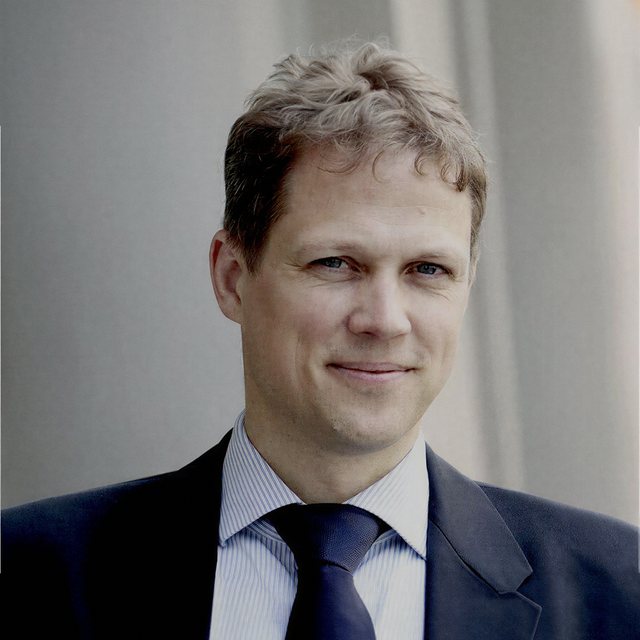
Oliver Handschuck
Oliver HandschuckHead of Commercial Asset Management
Contact

Do you have a commercial property with vacant space?

Talk to us, in confidence. We will get back to you promptly.

Do you live or work in a building we look after? Go to tenant services